
When Thomas Kuhn stated that “all significant advances break with old ways of thinking,” he articulated an idea that is both uncomfortable and profoundly revealing: science does not advance merely by accumulating knowledge, but by undergoing moments of rupture. For extended periods, a scientific community operates within a shared framework of understanding—a paradigm—that gives meaning to what it observes. No entanto, when anomalies accumulate and can no longer be explained, that framework begins to fracture. At that point, knowledge is not simply added; the very way of seeing the world is transformed.
History confirms that these shifts are neither smooth nor immediate. Ignaz Semmelweis demonstrated that something as simple as handwashing drastically reduced maternal mortality. He was not celebrated, but ignored and, in many cases, rejected. Alfred Wegener proposed that continents were not static but in motion—an idea deemed unacceptable for years. Em última análise, the observation attributed to Max Planck holds true: “Truth never triumphs; its opponents simply die out.” Yet, regardless of resistance, reality eventually prevails.
Because shifting paradigms is not merely a matter of evidence—it is, above all, deeply human. We do not defend only theories; we defend frameworks of meaning, personal trajectories, benefits, reputations, egos, positions, and even identities. Accepting a new vision implies, in some sense, destabilizing consciousness itself. This is why change is difficult. Max Planck alluded to this when he suggested that “consciousness is fundamental… everything derives from consciousness. Everything we speak of, everything we consider to exist, is dictated by consciousness.”
Por isso, change does not fail due to lack of data, but because of resistance to uprooting. Evidence helps—it accumulates, like drops filling a glass, until it eventually overflows.
Nevertheless, there are signs that something is beginning to shift again. Across various academic fields, spaces are opening where research is no longer limited to what can be externally observed, but dares to explore dimensions traditionally set aside: consciência, subjective experience, compassion, and the quality of inner life. This is not a rejection of scientific rigor, but an expansion of its questions. As William James noted, “the study of the abnormal is the best way to understand the normal.”
Within this context of rigor, pesquisar, e educação, our recent institutional partnerships also take shape: the University of Barcelona, with the development of the new Master’s program in Accompaniment and Grief; the Fundación Universitaria de Ciencias de la Salud; and the Universidad del Atlántico y del Mediterráneo, with upcoming Master’s programs in Consciousness and Social Leadership, and in Neuroscience and Extrasensory Perception. For us, more than institutional expansion, these alliances signal the emergence of a broader conversation—one in which the human being is not reduced solely to what is quantifiable, physical, or material.
Ainda, this openness coexists with a clear tension in the world we inhabit. Never before have we achieved such levels of economic and technological development, and yet few periods have revealed so clearly the fractures such a model can generate: persistent and exponential inequality, permanent structural exclusion, forms of violence that are not always visible but are deeply real, and new forms of impersonal control.
We must not deny progress—but rather question its foundations.
At this point, some contemporary economic perspectives—such as those proposed by Stefano Zamagni and Luigino Bruni—offer a meaningful alternative: an economy of the common good, where value is measured not only in terms of growth or profit, but also in dignity, reciprocity, and shared well-being.
The gap between this vision and current reality remains significant. Yet history suggests that paradigm shifts do not begin when they become the majority, but when a minority begins to see differently.
Perhaps, then, the underlying question is not merely scientific or economic.
Perhaps it is, ultimately, a transcendent one.
Because if, for decades—or even centuries—we have organized our systems around accumulation, competition, and efficiency, we must ask what would happen if the axis were to change.
If the criterion were not only how much we produce… but how we live.
If development were measured not only outwardly… but inwardly as well.
And then, the question ceases to be abstract:
What would this world look like if true progress were not measured by what we have… but by our inner stability, by the peace each of us is able to sustain?
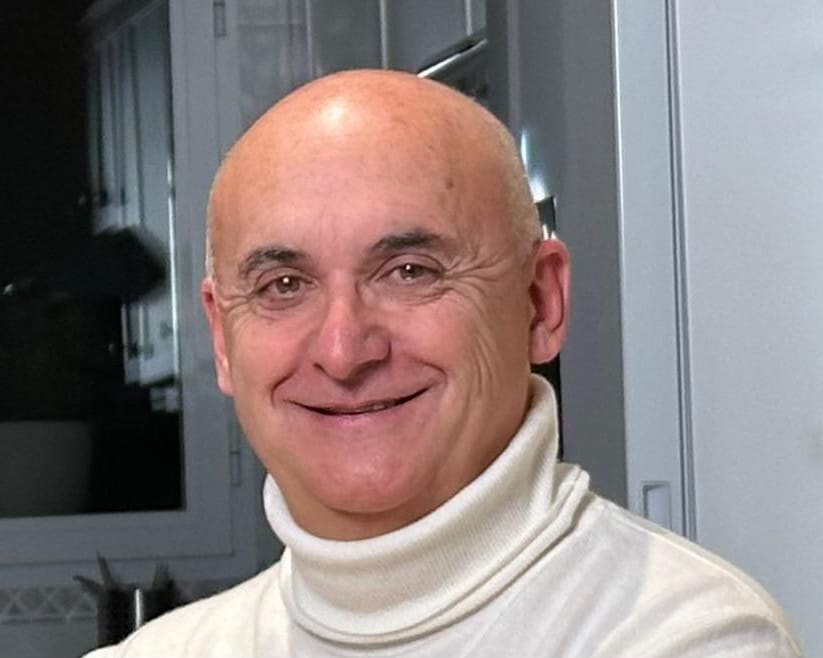
Doutor Xavier Melo
Diretor Fundador
Fundação Icloby