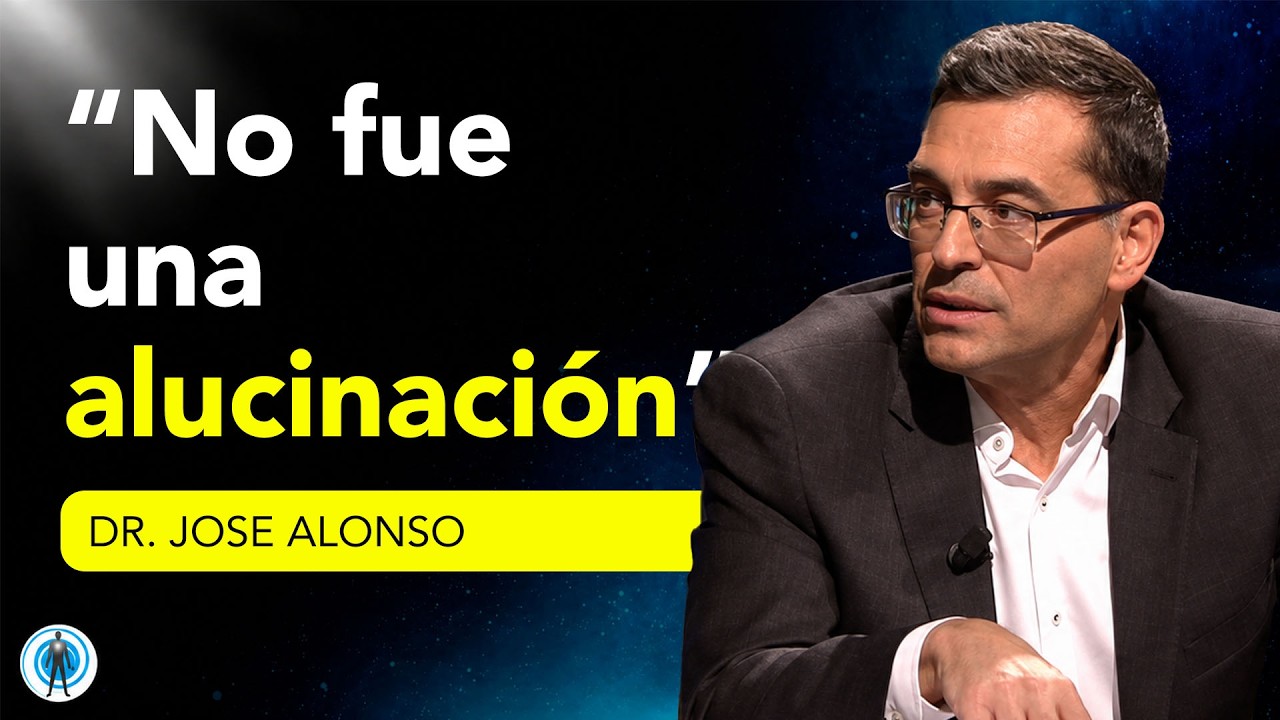

Revisão de Neural Regions Associated with Memories of Recalled Experiences of Death (Vermelhos; Authentic Near-Death Experiences[EQMs]): A Preliminary Functional MRI Study, by José Alonso Ruiz et al.
Dr.. José Alonso Ruiz’s research is not the first study to suggest that Near-Death Experiences (EQMs) are not hallucinations, but rather events experienced by the brain as real. No entanto, this study goes a step further.
Fifteen individuals whose NDEs were validated using the Greyson NDE Scale—a set of 16 questions concerning experiences occurring near death and used to determine whether such experiences meet the criteria for an NDE—were recruited and underwent functional magnetic resonance imaging (ressonância magnética funcional) of the brain. This technique allows not only detailed observation of the brain but also the processes taking place within it.
It is important to note that all 15 participants had undergone what could be described as a real near-death experience, using terminology associated with Sam Parnia—that is, they had physiologically come close to death.
Each participant was first asked to recall an actual event from everyday life, such as going to the garden to pick strawberries. Segundo, they were asked to invent a story about something they had never experienced, such as attending a Beatles concert in the 1960s. This produces patterns recognized in neuroscience: the brain behaves differently when recalling, hallucinating, imagining, and performing other mental processes. In simple terms, different areas of the brain become active depending on the function being performed.
The results showed approximately 80% concordance: when the 15 participants who had undergone an NDE recalled that experience, their fMRI readings displayed patterns compatible with those observed when recalling an ordinary real-life event. Além disso, these patterns were clearly different from those associated with hallucinated or imagined narratives.
The study provides a detailed description of the materials and methods used, along with numerous technical considerations. No entanto, for the purposes of this discussion, it offers a particularly thought-provoking conclusion: so-called NDEs do not display the same neural pattern as hallucinations. Em vez de, the neuroscientific findings indicate that memories of these experiences are processed by the brain in a manner consistent with memories of events experienced as real.
Óscar Llorens e Garcia