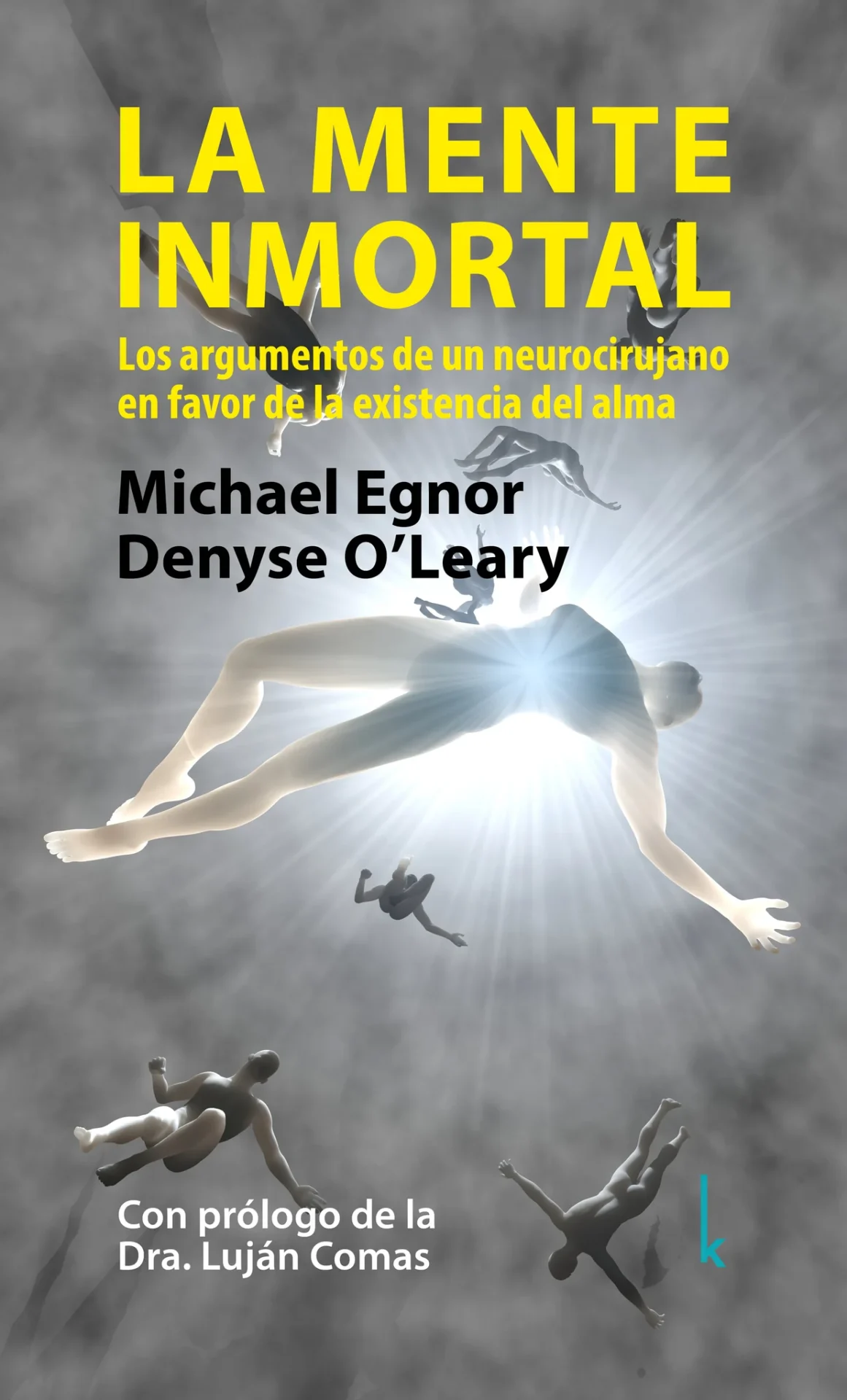

Review of the new book, “The Immortal Mind, Out Today — The Brain Can Be Split, but Not the Mind” by Denyse O’Leary and Michael Egnor.
Although this is essentially a review of a review, it is no less fascinating. In fact, it may be one of the most devastating critiques for those who consider the brain to be the origin or seat of consciousness.
In the late 20th century, researcher Michael Gazzaniga conducted a study with patients undergoing surgical treatment for epilepsy. This surgery involved severing the connection between the two brain hemispheres and appeared to result—here’s the fascinating part—in two independent centers of consciousness. This seemed to support the physicalist neuroscience model, which holds that consciousness is a function of the brain and nothing more.
Later studies, however, cast doubt on that interpretation. In the 1980s, Dr. Egnor performed the same surgery on a patient. However, the patient reported feeling no different after the procedure:
Despite having his brain split, he moved his arms and legs normally, his vision and speech were unaffected. In fact, the only thing different about Sam—aside from the bandage on his head—was that he no longer suffered from severe seizures. He clearly seemed like a single, unified person… He knew the surgery had permanently divided his brain in two, but the only real effect he noticed was the absence of seizures…
Since operating on Sam, I’ve treated several patients who have undergone split-brain surgery. Like other neurosurgeons, I found no evidence—either through routine clinical exams or life experiences—that suggested their minds were divided, even though their brains were.
If the brain causes consciousness, and the brain has been split, why does consciousness remain unified?
If, on the other hand, consciousness remains unified even when the brain’s hemispheres are no longer connected, then it seems likely that the brain does not create consciousness—it merely receives it, filters it, and gives it form, thereby creating the sensation of subjectivity tied to a body.
This model of the brain and its relationship to consciousness is neither original nor new. We find it explicitly in Bergson, and more or less explicitly in thinkers like William James or even Plato.
Ironically, a treatment intended to prove that the brain causes consciousness may well serve as strong evidence against that very hypothesis.
llorens llorens أنا غارسيا