Em 2018, an orca known as Tahlequah lost her calf shortly after birth. Para 17 days, she remained beside her, carrying her body through the waters of the Pacific. She traveled an enormous distance before finally letting her go.
This is not an isolated behavior. In different cetacean species, mothers have been observed remaining beside their dead calves, attempting to keep them at the surface and continuing to carry them on their backs. Behaviors involving closeness and companionship from other members of the community have also been documented.
Science does not know what an orca thinks when confronted with death, nor can we claim that she understands loss in the same way a human being does.
But there is something difficult to ignore: in the face of loss, the bond remains. And around the one who has suffered the loss, the community remains as well, accompanying her throughout the process. To the point that, when the calf slips and sinks, members of the community retrieve the body and place it back on the mother’s back. It is a deeply moving behavior. It only ends when the mother voluntarily allows her deceased calf to fall away.
I found myself thinking about this image as we prepared one of our most recent live gatherings on “Somos Alma,” dedicated to providing support through grief and loss for people affected by the earthquake in Colombia.
Because an earthquake may last only a few seconds, but those seconds can divide a life forever into a before and an after. Inevitably, the numbers follow: the dead, the missing, the injured, the homes destroyed. These figures are necessary to understand the magnitude of a tragedy, but they also carry the risk of obscuring what is essential.
Behind every number is a name. And behind every name, a story—often a tragic one.
A mother, a child, a partner, a friend. Someone who woke up that morning with plans for the next day, and someone who must now learn how to live with their absence.
Grief following a major catastrophe also has a particularly difficult characteristic: losses can accumulate.
A person may have lost someone they love and, at the same time, their home, their job, their neighborhood, their personal belongings, and many of the places that held their memories. They may even lose something we do not usually realize we possess until it disappears: the feeling that the world is a safe place. This is especially delicate in children.
But during our conversation, one question emerged that made me reflect deeply: What happens when someone who has lost almost everything is still capable of helping another person? Why does this happen?
After earthquakes, floods, wars, and other major tragedies, we find people who have just lost members of their own families and yet help search for the relatives of others. People who have lost their homes and still share the little they have left.
A grieving person has the right to feel sad, angry, lost, or simply unable to find any meaning in what has happened.
Yet there are people who, in the midst of that darkness, discover something remarkable: although they have lost so much, they still have something they can offer. And this can lead them toward a renewed sense of purpose and a fulfilling life.
It is then that a question arises that I would like to share: Can the love we can no longer physically give to the person we have lost find a new expression in caring for others?
I believe it can. Not only can this help ease suffering and absence—not because we have “gotten over” the person who died, but because love remains and needs to find a new way to express itself.
This reflection connects deeply with one of the social initiatives we are currently developing through our Foundation.
Volunteers, students, professors, and professionals are offering support to people experiencing loss and grief following the earthquake in Colombia.
Many times, they do so through a screen and from thousands of miles away. We might wonder how much can truly be done from such a distance. Much more than it may seem.
We cannot rebuild a house through a video call. We cannot erase a traumatic experience. And, claro, we cannot physically bring back the person who has died.
But we can do something human beings have needed for thousands of years.
We can be present. We can listen without judgment. We can allow someone to cry without rushing to stop their tears. We can listen to a story even if it has already been told many times. We can share a silence without immediately feeling the need to fill it with words. And, above all, we can convey something very simple to another person: during this moment, you are not alone.
Por esta razão, I would especially like to recognize the commitment of our volunteers, students, professors, and professionals.
They make it possible for the Foundation to reach people whom we may never physically meet.
There is also a point in the grieving process when the questions are no longer solely psychological or medical. Why did this happen? Why him and not me? How am I going to continue? Where is the person I love now? What do I do with everything I still feel for them? Does what I am experiencing have any meaning?
This is where we enter the territory of spiritual accompaniment. And spiritual does not necessarily mean dogmatic or religious. It is not about convincing anyone of our beliefs or providing prepared answers to questions for which we ourselves may not have answers. It is about accompanying the search for meaning, ter esperança, our relationship with what we consider transcendent, and the fundamental questions that emerge when our certainties collapse.
Perhaps spiritual accompaniment often consists of something far more humble than offering answers: creating a space where questions are allowed to exist and, little by little, where we can begin to relate differently to that enduring bond.
Let us return for a moment to our mother orca.
We do not know what she was thinking as she carried her deceased calf. We do not know what meaning that loss held for her. But we do know that, for a time, she remained beside her. And we know that cetaceans are deeply social animals, capable of forming complex relationships within their communities.
Perhaps that image reminds us of something extraordinarily simple that our society, so often obsessed with quickly solving every problem, risks forgetting: there are forms of pain that we cannot solve. In the face of them, all we can do is accompany, help, and offer spiritual support.
And sometimes, something extraordinary happens: the person who yesterday needed to be held discovers one day that they, too, can hold someone else. Not because they have forgotten. Perhaps precisely because they remember—and because a part of the love that seemed to have been left without a recipient begins to move once again, as part of the transcendent whole to which we all belong. Because we cannot change what has happened to us, but we can decide what we do with the love that remains—and live fully.
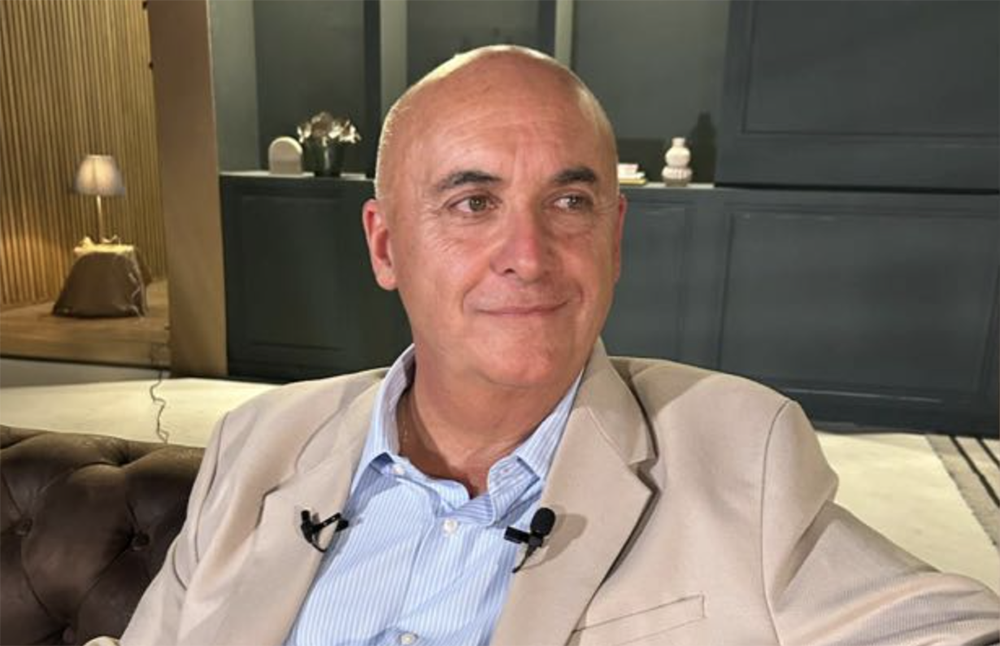
Doutor Xavier Melo
Diretor Fundador
Fundação Icloby