
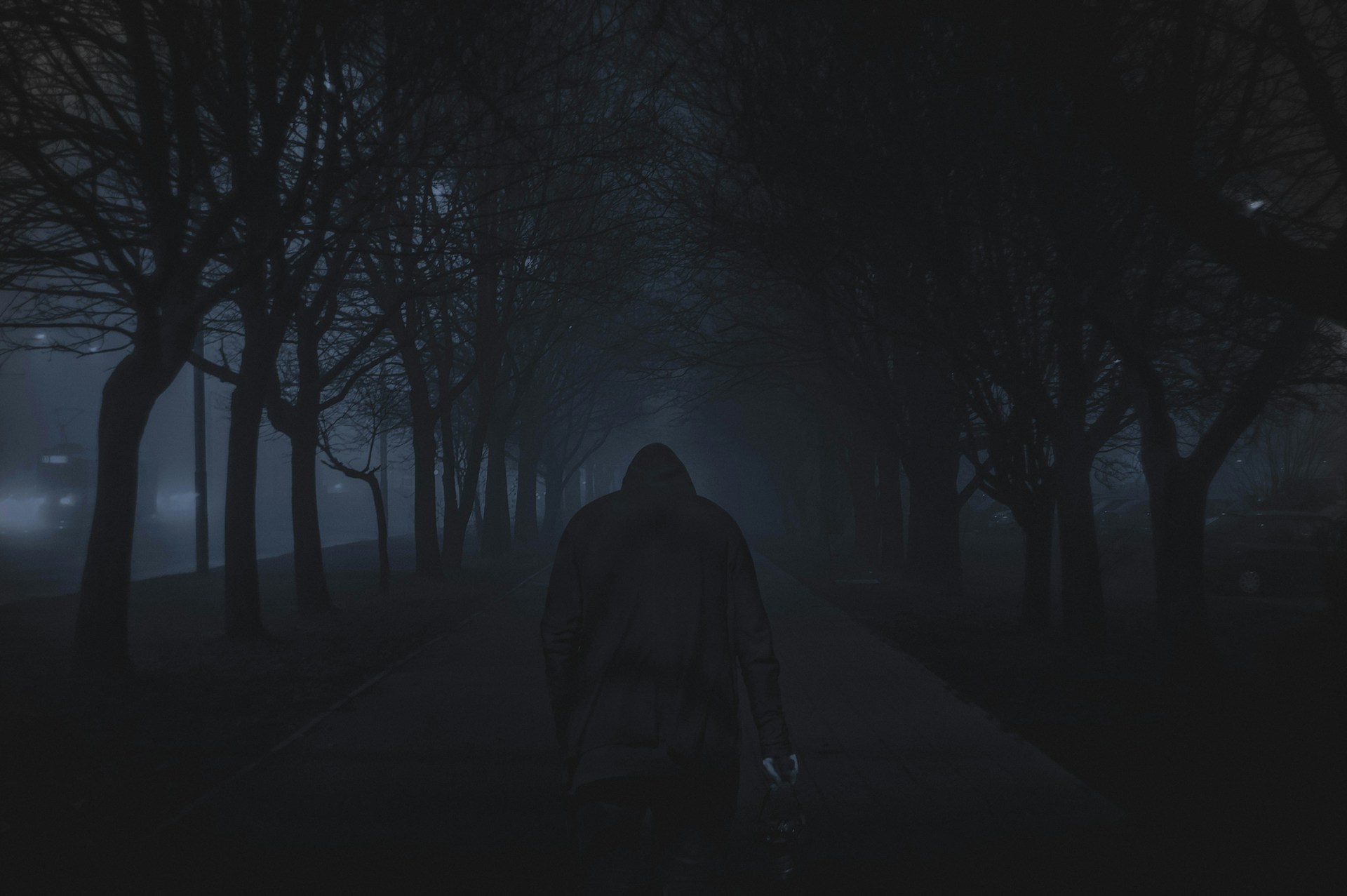
Near-death experiences (NDEs) undoubtedly carry a message of hope: you die, experience peace, love, euphoria, and reunite with loved ones in the afterlife. However, less attention is given to negative NDEs—those
In this article, Evans and Greyson present the essential characteristics of these distressing NDEs. According to the authors, negative NDEs are relatively uncommon and can be categorized into three types:
a) Inverse experiences
b) Void experiences
c) Hellish experiences
Experiências inversas include the typical features of an NDE—such as out-of-body experiences or the perception of light—but are experienced as threatening or terrifying by the individual.
Experiências vazias depict a dark and desolate reality, as though one’s life had been an illusion. Individuals may perceive themselves as a small sphere of light in an endless sea of nothingness, floating in eternal solitude. Some describe this type of NDE as “worse than a nightmare.”
Experiências infernais are the least frequent. These NDEs may lead individuals to what appears to be the gates of hell: suffering souls, grotesque creatures, screams, and moans—imagery reminiscent of Dante’s depiction of the inferno.
The explanations commonly proposed for these negative NDEs generally align with three interpretative models:
- The NDE served as a warning or catalyst for changing one’s way of life.
- In accordance with philosophical naturalism, the NDE was nothing more than a hallucination generated by the brain. The authors even describe a case in which a person who had previously experienced a positive NDE later had a negative one and concluded that while the first experience was real, the second was merely a brain-generated hallucination.
- The NDE was real but extremely difficult to integrate into one’s life: “I experienced hell. When I die, will I return there?”
Evans and Greyson propose seven key points for understanding these distressing NDEs:
- EQMs negativas ocorrem nas mesmas circunstâncias que EQMs típicas
- Fear of disclosing these experiences may lead to underreporting; there may be more cases than currently documented.
- A investigação não apoia a ideia de que “os bons vão para o céu e os maus vão para o inferno”.
- While positive NDEs do not follow a specific religious pattern, negative NDEs appear to resemble shamanic rituals involving suffering, death, and rebirth
- Every NDE is influenced by cultural concepts; what may be horrifying to a believer could be acceptable to an atheist.
- The central premise of NDE research remains intact: physical life may not be the only reality.
- Medical professionals caring for patients who have undergone a negative NDE should make every effort to remain neutral and nonjudgmental.
Distressing Near-Death Experiencies: The Basics de Nancy Evans y Bruce Greyson.
Óscar Llorens e Garcia