
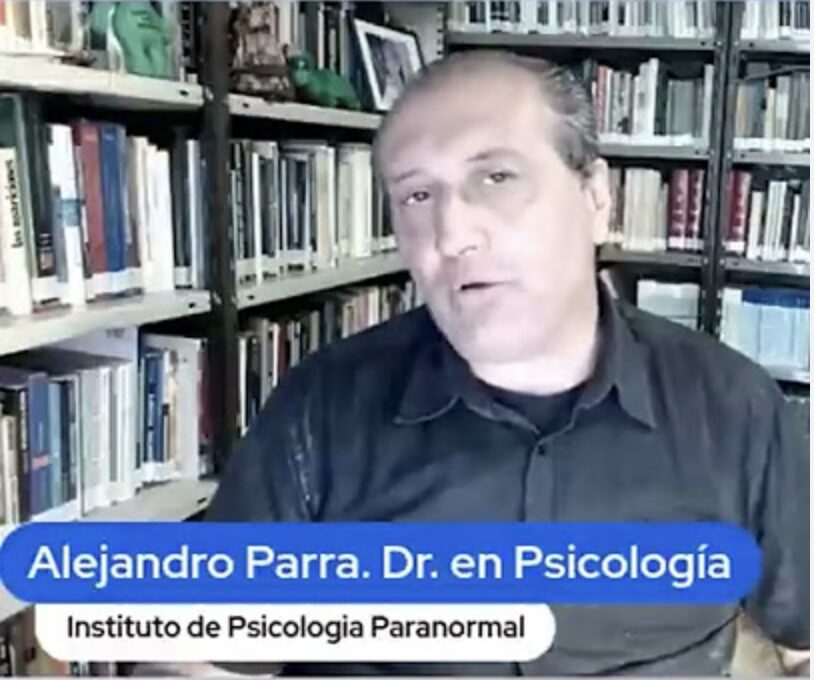
Alejandro Parra holds a Ph.D. in Psychology, a Master’s in Historical Research, is Editor of the Journal of Paranormal Psychology, president of the Institute of Paranormal Psychology in Argentina, and author of multiple books, einschließlich The Last Farewell Hug, published in 2019.
His interest in these episodes—long whispered about in hospital corridors, mostly by nursing staff, and often occurring around the time of a patient’s death—led him to conduct a formal investigation.
Through numerous interviews with nurses, DR. Parra documented how, at the moment of a patient’s death, they often report sensory experiences such as sudden chills, visions of spheres of light, mists, or cloud-like formations, feelings of unseen presences, apparitions, unexplained noises like knocks or ringing, as well as more emotional encounters—such as sensing or seeing deceased loved ones.
These types of events—though difficult to prove scientifically—are less frequently reported by physicians, WHO, according to Parra, tend to maintain greater professional distance due to their training.
Much like the growing scientific interest in near-death experiences (NTEs), Parra notes that there is an increasing willingness to study such phenomena. For instance, specialists in neurosurgery, cardiology, and anesthesiology are now reporting NDEs more frequently, indicating a broader openness to reconsidering beliefs about the afterlife.
Trotzdem, Parra emphasizes that caution still prevails. For many, staying silent on these topics remains the safest path to avoid jeopardizing their careers. Das, he argues, highlights the ongoing need to normalize these experiences, integrate them into research, and allow both patients and healthcare professionals to discuss them openly and without stigma.
Sehen Sie sich das vollständige Interview an