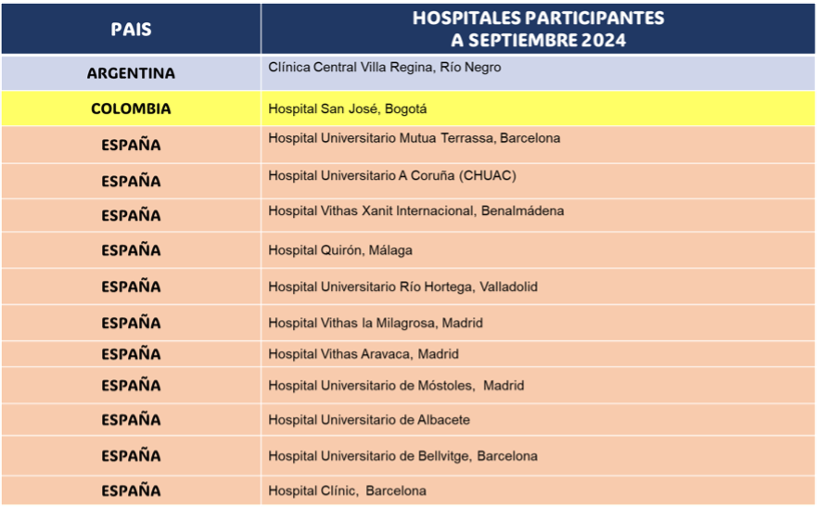


The LUZ PROJECT, the first research on Near-Death Experiences (NDE) in hospitals in Spanish-speaking countries, continues to grow. With the addition of 3 new hospitals in Spain, we now have 13 institutions involved in our research.
With these additions, we now have 11 Spanish hospitals and 2 more hospitals in South America actively working on the project.
We warmly WELCOME the new hospitals. They are:
- The University Hospital Mútua Terrassa in the city of Barcelona
- The University Hospital A Coruña (CHUAC)
- The Vithas Xanit International Hospital in Benalmádena, Málaga
The University Hospital Mútua Terrassa was founded in 1900. According to its mission, it works to serve people by anticipating and solving health, personal autonomy, or well-being-related issues. Its area of influence is Catalonia. In its care model, the primary focus is on people, which is its first Corporate Value, complemented by fostering professionalism, anticipating needs, promoting a commitment to efficiency, and ensuring integrity and ethical behavior.
The University Hospital A Coruña was inaugurated in 1972 and was originally known as the Juan Canalejo Health City. Since its founding, one of its major objectives has been teaching and humanization. Since the 1970s, it has focused on training specialists, particularly in Family Medicine in 1979. It has a documented Humanization strategy, which, as stated on its website, “includes a series of actions aimed at fostering good relationships between people, improving facilities with more welcoming spaces, streamlining administrative procedures, focusing on particularly sensitive areas, achieving a satisfactory work environment, and improving relationships with users. All of this is structured around four strategic axes, organized from the outside in, from people to society”.
Finally, the Vithas Xanit International Hospital, located in Benalmádena, a municipality 22 km from the city of Málaga, is part of the Vithas Hospital Group, which belongs to the Goodgrower Group, established in 2012 to improve people’s lives. The group’s focus on professionalism, quality care, innovation, and closeness to the patient has led this hospital to specialize in teaching and research. Today, it has 141 individual rooms, 16 ICU beds with natural light, 7 operating rooms, 2 endoscopy rooms, and a hemodynamic room, a state-of-the-art surgical block, and 4 hospitalization floors, among other facilities, allowing it to serve foreign patients in approximately 16 languages. Particularly in the fields of Oncology and Cardiology, it seeks to stay at the forefront of diagnostics to offer the latest advances to its patients.
Below is a summary of the list of the 13 hospitals.