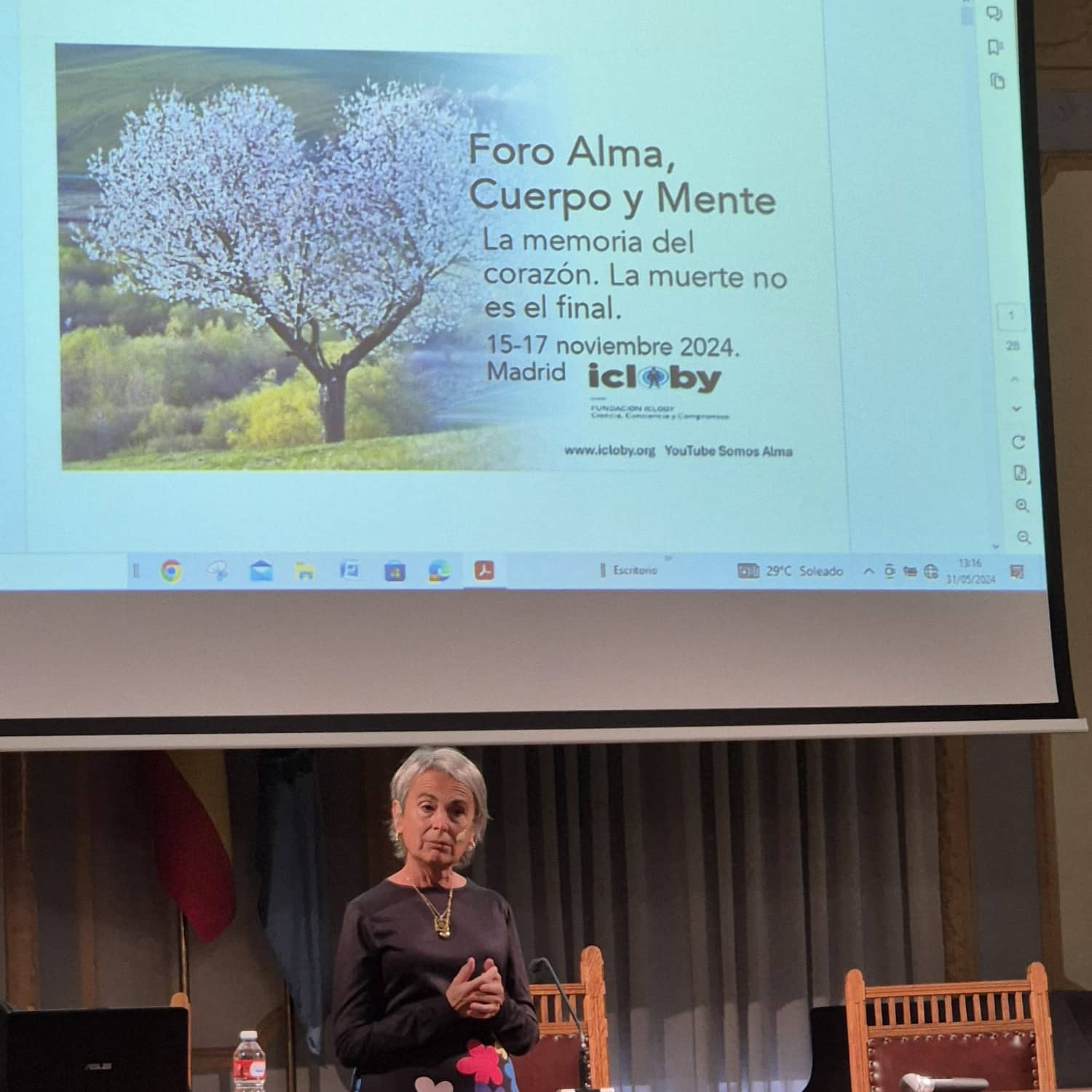
Writers, psychiatrists, doctors, philosophers, theologians, and other scientists gathered at the Soul, Body, and Mind Forum to explore answers to many questions about life, death, and our surrounding world.
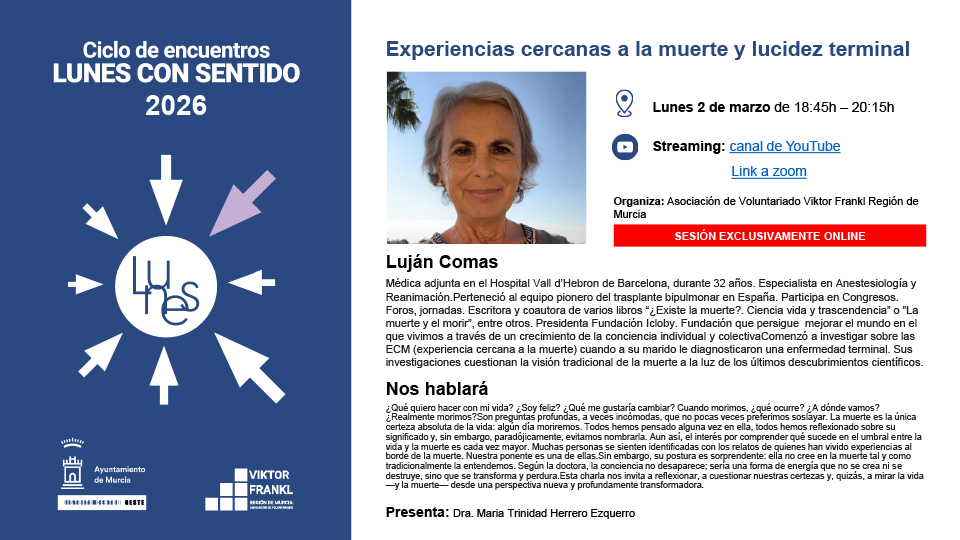
Dr. Luján Comas, president of the ICLOBY Foundation, participated in the forum, sharing her insights on understanding death as a step that is not the end. She also discussed her experience related to the Memories of the Heart.
For over 32 years, Dr. Comas worked as an attending physician in the Anesthesiology and Resuscitation Department at Vall d’Hebron Hospital in Barcelona. She was part of the pioneering team for lung transplants and the resuscitation team. Since then, she became a dedicated researcher on the heart as the “brain of the brain”.
Scientific evidence continues to support the theory that the heart can be considered a dual spiral antenna for both receiving and emitting information. Studies show that the heart contains over 40,000 neurons, which interconnect to form a complex network of neurotransmitters, proteins, and support cells, making it a developed and independent nervous system distinct from the brain.
An interesting contribution from Spanish cardiologist Dr. Paco Torrent Guasp revealed that the heart is not made up of four independent chambers, but rather the ventricles form a unique muscular band rolled in a double helical spiral from the aorta to the pulmonary artery.
The heart generates a symphony of sounds: electromagnetic waves, pressure waves, and thermal waves that transmit information throughout a vast vascular network to the cells. It produces hormones and a toroidal electromagnetic field five thousand times more powerful than that of the brain.
If we consider that these wave patterns carry other waves that resonate in our thoughts, feelings, and throughout the body, it would not be surprising that the heart plays such a powerful role as the great computer of our lives.