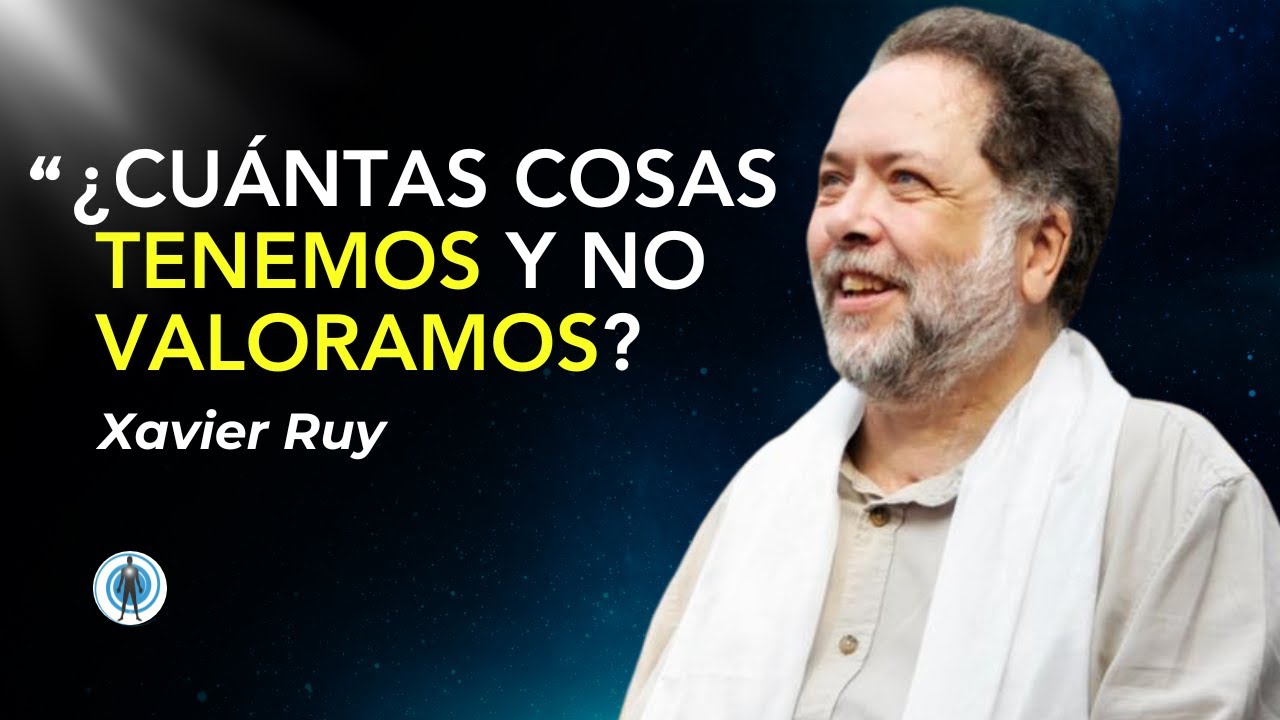
Xavier Ruy de Juan has never seen himself as a victim, nor has he ever told himself, “poor me.” His commitment to living fully and to becoming a better person every day remains intact, despite the permanent disability he has lived with since his accident. For Xavier, this mindset feels natural—something deeply connected to life itself. His strength comes from valuing who he is and what he has. He believes that one day we will all die, and that this inevitable reality becomes an invitation to truly live while that day has not yet arrived.
At the age of 22, Xavier had his whole future ahead of him. During a vacation that year, he dove into the water and fractured his fifth cervical vertebra. With a prognosis of no more than 24 hours to live, he was admitted to the General Hospital of Catalonia, where, in addition to the spinal injury, his lungs were filled with water. While in this critical condition, he experienced a near-death experience (NDE) that led him to understand that life goes far beyond physical death.
In this interview, one question stands out as a powerful invitation for reflection:
How many things do we have within our reach that we fail to value?
Watch the full interview