
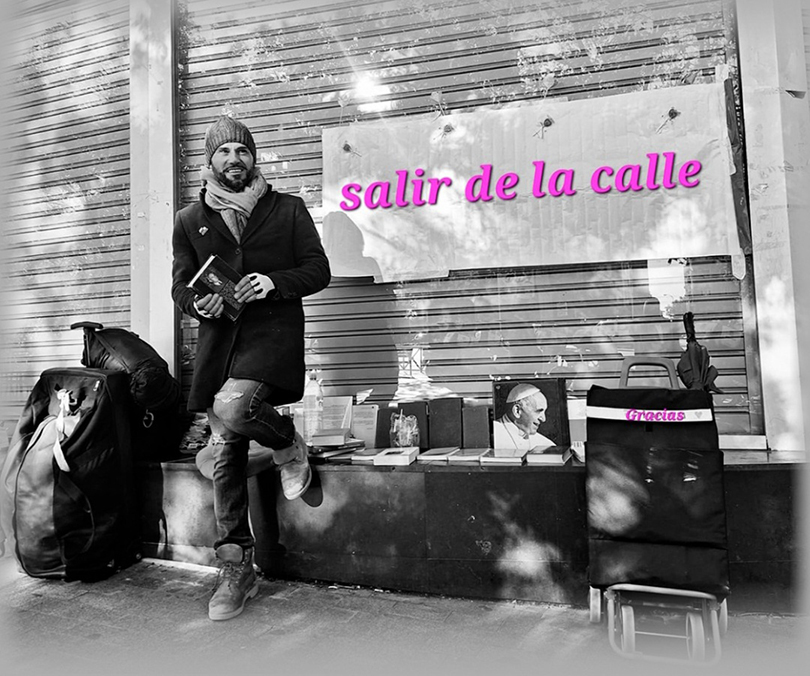
“If you help me, I’ll give you a book. If you give me a smile, I’ll give you a chocolate,” was the slogan Ángel Custodio wrote on a sign while living on the streets of Madrid. He was clear that he didn’t want to beg for money. In the loneliness of the street—after days of feeling invisible to passersby—he came up with this way to survive. Unknowingly, he was walking toward his life’s purpose: to help those truly in need. Simply put: to serve the needy.
For a long time, Ángel Custodio lived a life many would envy. As a talented athlete, he earned scholarships that allowed him to receive a top-level education both in and outside of Spain. His professional life started successfully, and he soon built up wealth that gave him a comfortable lifestyle. But a decision to invest in a new business led to financial ruin. Feeling alone and without a future, he attempted suicide—and followed through with it.
Experiencing what it means to be homeless helped him understand that world deeply and discover what he now sees as his true calling. Today, he knows this purpose gives life meaning. He’s aware of his past mistakes and has placed his trust in a Higher Power he calls God.
After publishing a book, the proceeds of which helped him leave the streets, he now knows the only thing he cannot afford is to let his ego take control again.
His book, titled Leaving the Streets, helps him make a living and assist others.
Full interview available here