
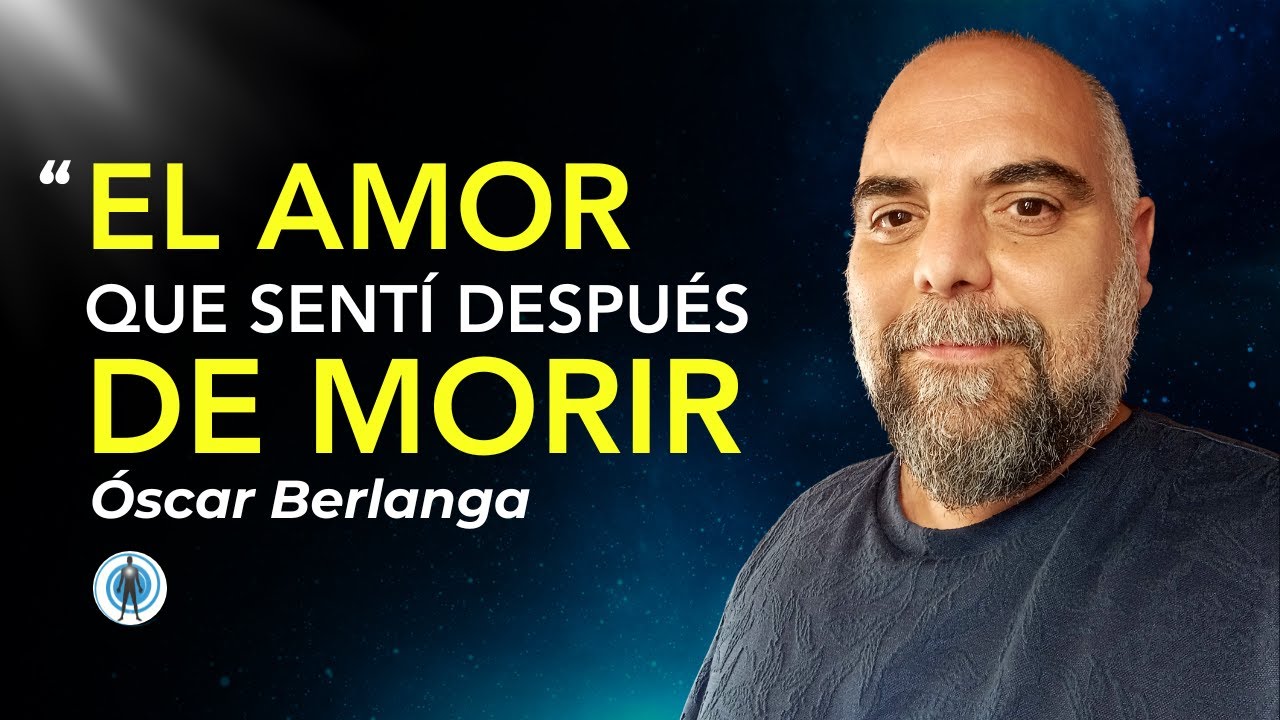
Óscar Berlanga is a visual artist dedicated to editorial illustration. He also works in film and television animation, as well as sculpture for both cinematic projects and personal creations. His near-death experience (NDE) took place in 2009 while he was living and working on El Hierro, in the Canary Islands
The duration of Óscar’s NDE cannot be precisely determined. He suffered a cardiorespiratory arrest after falling into a ravine when he lost control of his bicycle. From that moment until he regained consciousness in the hospital—where he was taken by emergency services—what Óscar lived through was truly extraordinary. So much so that he admits many of these moments are nearly impossible to describe in words. Among the phenomena he recounts are: feeling as though he became the ocean and the wind, having 360-degree vision, telepathically sensing the anguish of the man who witnessed his accident and called emergency services, entering a tunnel, perceiving the scent of his deceased grandfather, and recalling colors he knows do not exist here but that he was certain existed there. These are just some of the details that make up his NDE.
Why he returned, and why he regards this as one of the most conscious and life-filled experiences he has ever had, are themes Óscar discusses in this interview with Dr. Luján Comas, president of the ICLOBY Foundation.
Watch the full interview