Questioning traditional models, the need to broaden our perspective beyond what has long been customary, the desire to integrate science and consciousness, and the willingness to engage fearlessly in dialogue about life’s great mysteries are just some of the conclusions we can draw when we see that articles such as “Why the Brain Is Not the Producer of Consciousness” attract such a large readership—surpassing other topics that might be considered of broad collective interest.
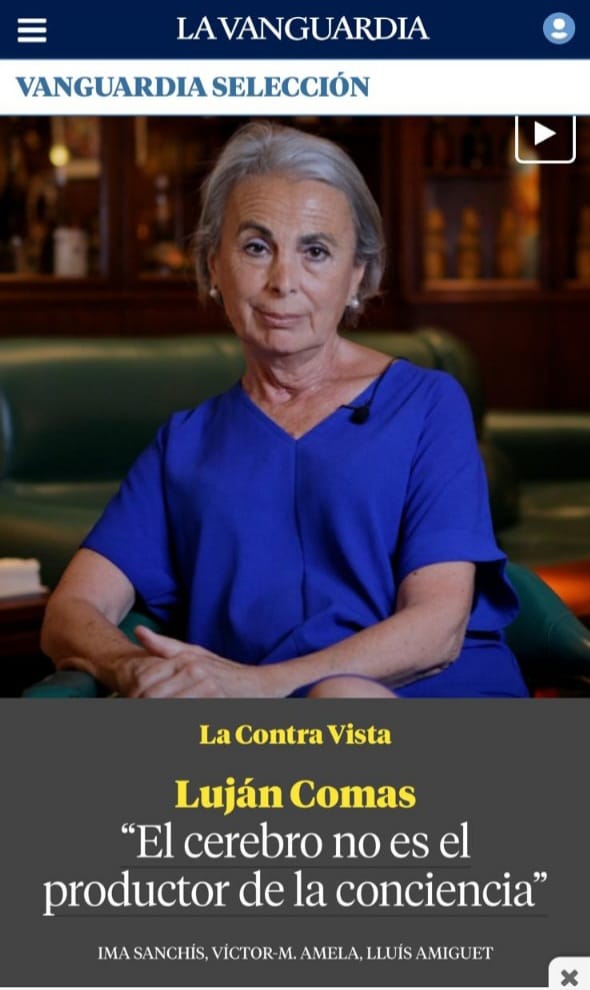
In the October newsletter, we reported that the Spanish newspaper The avant -garde had invited Dr. Luján Comas, President of the ICLOBY Foundation, to speak with journalists from the The Contra View section about the brain and consciousness.
The article highlighted Dr. Comas’s arguments supporting why the brain is not the producer of consciousness.
On December 31, the newspaper informed the Foundation that this article had been selected as one of the most-read pieces by subscribers in 2025.
Without a doubt, these figures indicate that the work of educating people on topics related to Consciousness, Death, Near-Death Experiences (NDEs), among others—an effort to which the Foundation devotes part of its time—is bearing fruit.
What wonderful news!