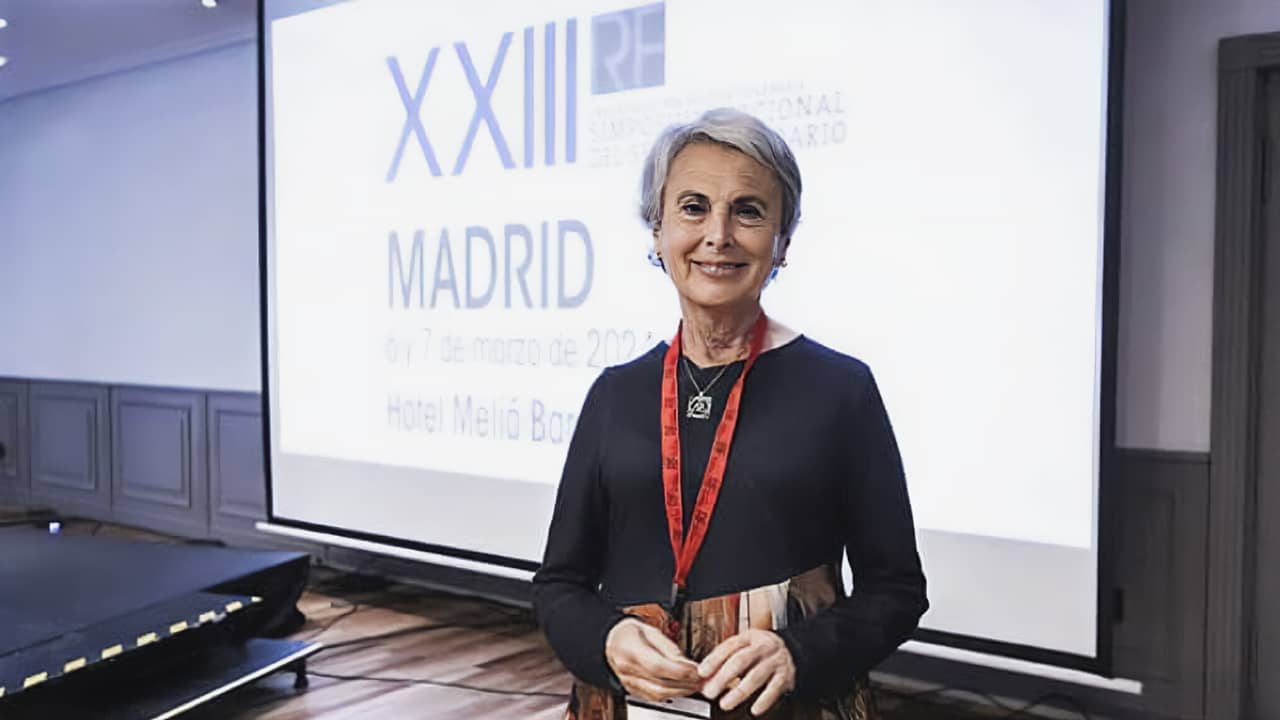
“I’m not quite sure what I’m doing here because my field—consciousness and science—may not seem directly linked to this sector. But perhaps we can start connecting the dots.” With these words, Dr. Lujá. 2024 annual meeting of the funeral sector.
In what she considered a challenging setting, Dr. Comas aimed to inspire a shift in perspective regarding death and the role of funeral professionals. She emphasized the need for a global shift in consciousness, advocating for a new way of understanding death while also addressing broader issues such as planetary care and sustainability. She highlighted the importance of turning to science for the necessary knowledge to bring about this shift in consciousness, helping to navigate these challenges and facilitate this transition successfully.
Dr. Comas encouraged the audience to reflect on how science, consciousness, and death intertwine. Through thought-provoking questions such as: What is death? What happens to the energy that once animated a body that now lies lifeless?—she invited attendees to explore the possibility that, according to the laws of thermodynamics, energy is neither created nor destroyed, but transformed. Could it be that this energy transitions to another plane of consciousness?
Her presentation gradually steered towards a scientific perspective, posing the fundamental question: Are we a body, or do we have a body?
She demonstrated, through research on Near-Death Experiences (NDEs), that consciousness is not produced by nor confined to the brain. This, she argued, suggests that when the brain ceases to function, consciousness does not die with it but continues—and is much more than we perceive.
In addressing the topic of death, Dr. Comas also outlined the most common attitudes toward it, encouraging attendees to explore literature on the subject to expand their understanding of this profound transition.